
Making more from less – A coverage of the Upcycling Symposium 2026
24. november, 2026Bæredygtighed // Branchen // Fødevarer // InspirationConscious Creativity
As climate change, geopolitical crises and rising costs put pressure on our food systems, we need to become more creative with the resources we already have. But who knows, maybe constraints of upcycling aren’t a limit to creativity, but a starting point for it? At this year's Upcycling Symposium, chefs, students and food professionals gathered to explore exactly that.
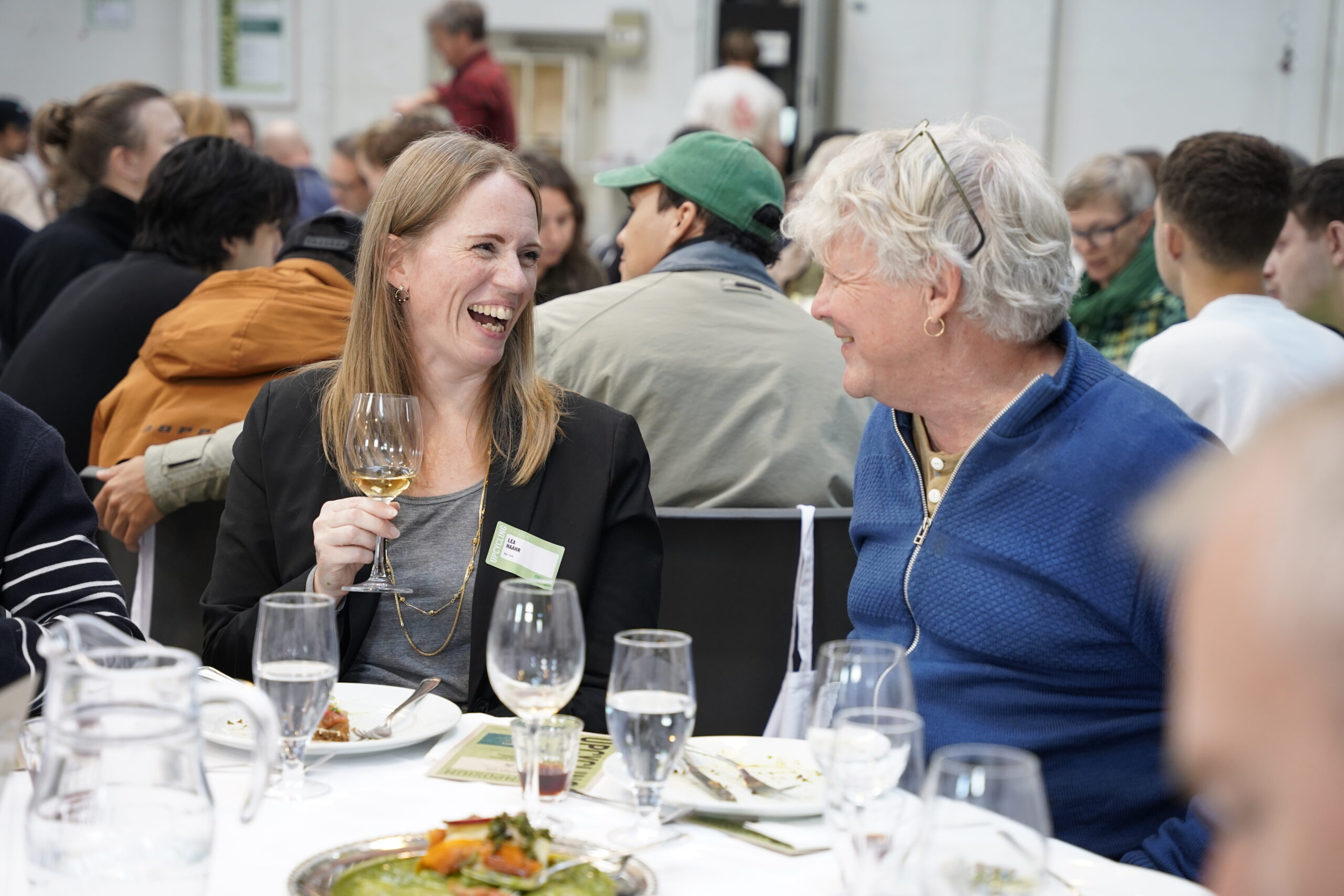
On 10 November, DRC participated in this year's Upcycling Symposium, organised by The Green Lab and hosted by the Hotel and Restaurant School. More than 200 people attended, and the atmosphere was both ambitious and inspiring. Throughout the day, chefs, restaurateurs, students and food innovators came together to explore new ways of reducing food waste.
Under the theme Conscious Creativity, some of the most influential voices in circular gastronomy shared their experiences of turning what is often seen as waste into opportunity.
This year’s speakers
Among the speakers and workshop facilitators were chefs and innovators including:
- Matt Orlando from ESSE (København)
- Chantelle Nicholson from Apricity (London)
- Rob Rubba from Oyster Oyster (Washington D.C.)
- Will Goldfarb from Room4Dessert (Bali)
- Albert Franch Sunyer from Nolla (Helsinki)
- Will Moffat from b.culture (Oslo)
- Lucas Oliveira from Endless Food Co. (København)
- Ben Hurley from Domestic (Aarhus)
- Ryan Walker from SILO/FLUX (London)
- Lara Espírito Santo and George McLeod from SEM (Lissabon)
Through talks, tastings and workshops, they challenged us to rethink familiar habits and consider how circular thinking can become a natural part of everyday cooking in private and professional kitchens.
From Challenges to Solutions
Matt Orlando and Martin Petersen opened the Symposium by outlining the challenges we face in reducing food waste and the solutions needed to address them:
The Challenge
- It requires a shift in mindset
- It requires changes to everyday practices
- An entire system needs to change
- It's too easy to simply throw food away
- Change takes energy
The Solutions
- Take it one step at a time
- Start with education
- Communication matters: the way we talk about food waste makes a difference
- We must normalize upcycling
“Push against the system – but don’t be annoying”
The biggest challenge is not necessarily technical. It is cultural.
Matt Orlando argued that chefs need to challenge established systems within the restaurant industry and question the practices and routines we often take for granted.
He put it simply: “Push against the system.” And he added: “Don’t point fingers without a solution”.
The transition towards more circular kitchens can feel overwhelming. It requires new routines, new ways of thinking and, in many cases, changes throughout the entire operation.
Why upcycling is about progress, not perfection
Changing the system requires curiosity and creativity. And it is okay to start small.
"It's okay not to do it to the extreme. Change will happen gradually, and that's okay," as Orlando put it.
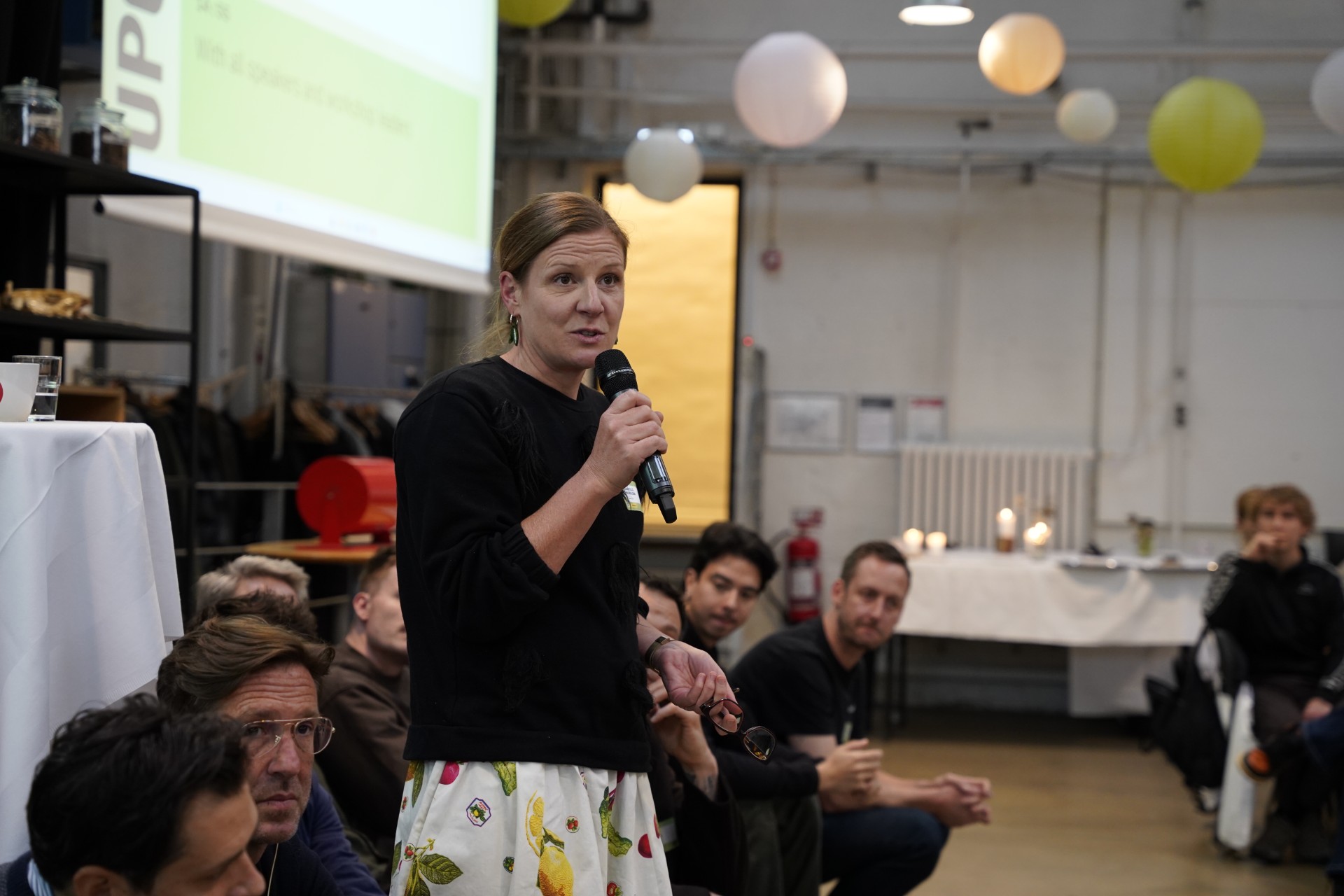
Chantelle Nicholson about future cooking
Curiosity is a skill
We asked Chantelle Nicholson, chef and owner of Apricity in London, how she thinks that change can happen.
For Chantelle curiosity may be one of the most important qualities future chefs can develop.
"I think future chefs need approaches rather than skills," she says. "Questioning, being curious and being creative is really important."
Aligned with Matt’s opinion, Chantelle believes the industry needs people who are willing to challenge established ways of working.
"I think in order to see change, that's what we need. More people who are willing to question things, willing to do things differently and think creatively."
Back to the roots
Interestingly, Chantelle's story is not one of discovering sustainability, but of rediscovering it.
Growing up in New Zealand, seasonal eating was simply part of her everyday life: "We ate what was local and seasonal because we were a tiny island. I remember looking forward to the first strawberries of the season."
Then she came to the UK and worked in a “very big kitchen that was not especially focused on conscious cooking.” While she was fascinated by the new procedures, she eventually found herself returning to the values she had grown up with: “it was like, hold on, actually that makes a lot more sense than this does.”
She describes it as “quite amazing” and a “full circle moment” when she was able to combine her new knowledge and experience with her childhood memories.
Her work today draws heavily on the values she grew up with in New Zealand, where eating seasonally and making the most of available resources was simply a way of life.
If it is not financially sustainable, it's not sustainable
While environmental ambitions often dominate discussions about food waste, Nicholson was clear on another important point: “If it is not financially sustainable, it's not sustainable.”
In our opinion, a particularly relevant perspective. If reducing waste costs you more than it gives, it can’t dominate the future.
Luckily many circular solutions can strengthen a restaurant's bottom line over time, according to Nicholson. Using more of the ingredients purchased, reducing unnecessary consumption and reconsidering established routines can all contribute to lower operating costs.
What a waste not to use the waste
“You have to pay to get rid of waste. So, if you can minimize it, that's surely a bonus. […] and if you can reduce your food costs by using everything, like that’s got to be a benefit.”
She adds:
"There may be more of an initial outlay, but over time you will easily save money."
That does not mean the benefits appear overnight. Chantelle makes it clear that it is about commitment and taking it bit by bit.
It echoed what many speakers highlighted throughout the day: meaningful change rarely happens overnight. It happens step by step – but it happens.
But why even bother changing?
Why invest time and energy in changing established ways of working?
We asked Chantelle whether her motivation is driven by good intentions or by building a better business.
“It is the joy of food”, she answers.
“And I think, you know, the fact I can keep learning. I love that I can be very creative. I love the fact that every day I can see the results of my work and everyone else's work. We get to bring joy to so many people each day and we get to create something.”
Taste comes first
That “something” that Chantelle creates is often created out of what others might call waste. But according to Chantelle, that is not the important thing. The most important thing is simply ‘taste’.
As Chantelle puts it:
"Taste is the test."
No matter how innovative an upcycled ingredient or circular concept may be, guests ultimately return because the food tastes good.
Innovation or tradition?
It is not a by-product, it’s just a product
Despite all the innovative ideas and advanced techniques presented throughout the day, one message stood out: upcycling should not be something special, it should simply be the norm.
Food upcycling can be innovative, radical and futuristic. But in many ways, it is also just doing what generations of chefs and home cooks always have done: making the most of the ingredients available to them, and traditional cuisines around the world are built on exactly that principle.
The goal is simply to make it the norm again.
As Rob Rubba simply puts it: “Future cooking is not about what we can have, it is focusing on what we already have. It is going back down to something smaller”
We should not call it a side-stream, a by-product or a leftover. It is just an ingredient.
Circular gastronomy is not about compromise. It’s about creativity
Speaking about the challenges ahead, Chantelle says:
“I don’t have all the answers, none of us do. And that is the exiting part of it”
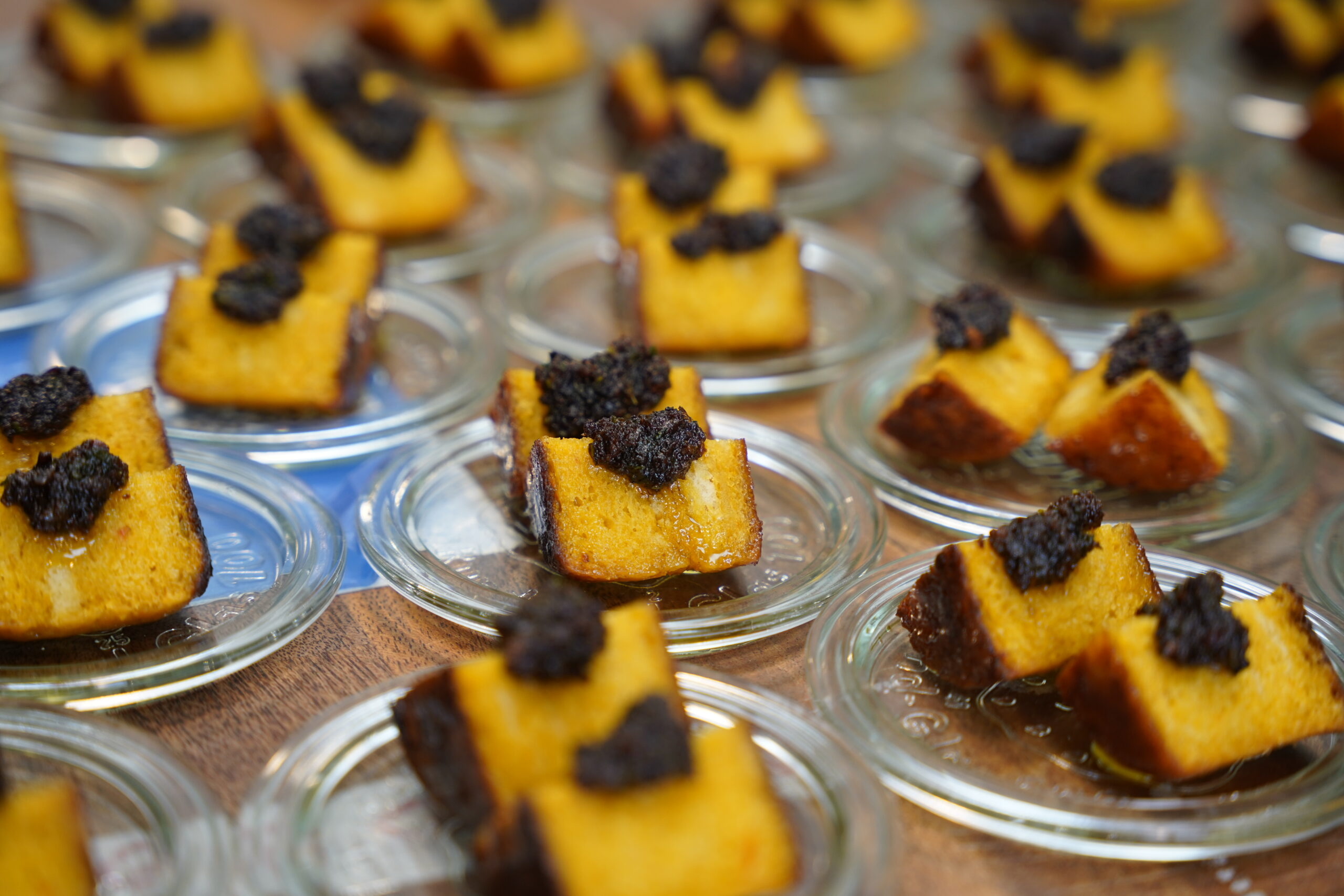
Excitement and creative thinking were undoubtedly on display throughout the symposium. Chefs and students exchanged ideas on everything from fermentation techniques to side-stream utilisation, exploring how peels, stalks, trim and bones can be transformed into new flavours and dishes. One example was turning carrot peels into miso, while another showed how vegetable trimmings can be collected and frozen until there is enough to make a rich stock.
All in all, the symposium showed that working with constraints does not have to hold us back. On the contrary, it can be a powerful driver of creativity.
And for an industry built on creativity, that may prove to be the most valuable resource of all.